Insights

Singapore Immigration Insights & Case Studies

Observations from real journeys, grounded in published facts.

Explore general information and observations related to Singapore PR, Citizenship, Work Pass, Dependent's Pass and Long-Term Visit Pass applications. This page covers commonly discussed topics such as application considerations, published immigration statistics, procedural observations and general immigration-related developments in Singapore. Here you will find anonymised case studies drawn from real situations, and featured insights based on officially published data. All content is provided as general information, not immigration advice.

Case Studies & Observations

Situations applicants rarely anticipate.

Every immigration application journey is different. Behind each approval, delay, rejection or complication are unique circumstances that applicants may not always anticipate at the beginning of the process. These anonymised observations are drawn from real situations encountered in Singapore immigration matters, and are shared for general awareness. Click any case to read it.

CASE STUDY 13What to do after Singapore PR approval?

For many applicants, receiving Singapore PR approval feels like the finish line after months of waiting. In reality, approval is often the beginning of a new chapter.

Many newly approved PRs are surprised to discover that various formalities and administrative matters remain after the approval letter arrives. These may include completing PR formalities, attending required appointments, understanding CPF-related matters, and becoming familiar with the role of the Re-Entry Permit (REP).

Common questions that arise after approval include:

  • What happens immediately after PR approval?
  • Are there any deadlines I should be aware of?
  • What is a Re-Entry Permit (REP)?
  • When do CPF contribution requirements apply?
  • What documents should I keep for future reference?

While every individual's circumstances may differ, understanding the post-approval process helps new PRs navigate the transition into their new status. Obtaining PR approval is a significant milestone, and also the start of a new phase of life in Singapore.

CASE STUDY 12Singapore PR processing timeline: what does it actually mean?

One of the most common questions we hear is: "My friend received approval in 6 months. Why is mine still pending?"

The reality is that every PR application follows its own assessment process, and timelines vary from case to case. A shorter processing time does not necessarily mean an application is stronger, and a longer processing time does not necessarily mean an application will be unsuccessful.

During the waiting period, applicants often wonder whether their application is taking too long, whether a faster outcome means a higher chance of approval, and whether they should be concerned when others receive results first. The processing timeline itself may not provide a clear indication of the eventual outcome.

While waiting, many applicants choose to focus on what they can control, such as career progression, professional development and future opportunities. The waiting time may be uncertain, but personal growth does not have to be.

CASE STUDY 11Work pass holder lost job while PR is still pending

A situation many applicants worry about, especially during periods of resignation, retrenchment or employment changes. Recently, one of our clients was also informed of his retrenchment while his PR application was processing.

A common question is: "Do I need to inform ICA immediately?" In many cases, the more important issue is whether there remains a valid work pass status supporting the ongoing PR application. Situations people may face include:

  • An EP holder losing their job while PR is processing
  • An S Pass holder changing employer during the application
  • Work pass cancellation before the PR outcome
  • A downgrade from EP to S Pass while pending
  • A long unemployment gap during the processing period

A valid work pass status remains an important part of many work-pass based PR applications, which is why applicants often become concerned when their pass is cancelled, they are between jobs, or their employment situation changes significantly. Every case is different, depending on factors such as current pass status, re-employment timeline and overall profile.

With retrenchment news in the market, situations like this are increasingly discussed among Singapore PR applicants. Many only begin researching after receiving a retrenchment notice, so understanding the implications early can matter during the waiting period.

CASE STUDY 10Work Permit holders planning to marry in Singapore

A recent client of ours, whose spouse is a Work Permit holder, came to us for assistance. Many people are unaware that under MOM regulations, Work Permit holders must first seek approval before marrying a Singapore Citizen or Permanent Resident, whether the marriage takes place in Singapore or overseas.

This applies if the person currently holds a Work Permit (including a Training Work Permit), or previously held a Work Permit as their last work pass in Singapore. According to MOM guidelines, approval is required regardless of whether the marriage is civil, religious or customary.

MOM also states that these regulations may continue to apply even after the Work Permit has expired, and that failure to seek approval when required could affect future work privileges or entry into Singapore. In addition, Work Permit holders are only allowed to become pregnant and give birth in Singapore if they are already married, with MOM's approval, to a Singapore Citizen or Permanent Resident. Exceptions exist under certain circumstances, such as former Work Permit holders now holding an EP or S Pass, or who are already PRs or Citizens.

This is one of those regulations many applicants only discover late in their immigration or family planning journey. If you are planning marriage, pass conversion, a PR application or a future Long-Term Visit Pass arrangement, refer to the latest official MOM guidelines and understand the applicable requirements early.

CASE STUDY 9Reapplying for PR after multiple unsuccessful attempts

A recent case involved a client who had previously submitted three Singapore PR applications, all unsuccessful. He recently changed employment, with an increased salary, a new appointment and expanded responsibilities.

After several years of working in Singapore, he is now preparing another PR submission following these major updates to his employment profile.

Situations like this are not uncommon. Between earlier applications and a later resubmission, an applicant's profile may change considerably through career progression, increased salary, a longer work history in Singapore, new professional responsibilities, and updated supporting documents. In many cases, applicants choose to wait until there are meaningful updates to their overall profile before considering a fresh submission.

PR applications are not static. An applicant's circumstances, employment background and supporting profile may evolve significantly over time after previous unsuccessful attempts.

CASE STUDY 8After a divorce, can PR still be renewed independently?

A recent case involved a Singapore Citizen husband and a wife who previously obtained Singapore PR under spouse sponsorship. The couple later had a child together who is a Singapore Citizen. The marriage is now in divorce proceedings, and the wife intends to seek custody of the child.

A common question that later arose: can the wife continue renewing her PR or Re-Entry Permit (REP) independently after the divorce?

Situations like this are often more complex than people initially expect. While PR may have originally been granted through spouse sponsorship, changes in marital status, family structure, custody arrangements and the applicant's own ties to Singapore may later become relevant considerations during future renewals or subsequent immigration matters. Cases involving Singapore Citizen children can introduce additional family-related considerations, especially where custody and caregiving responsibilities are involved.

Family-based immigration matters do not always end after PR approval. Changes in personal circumstances years later may still raise new immigration questions that applicants did not originally anticipate.

CASE STUDY 7Sponsoring a child from a previous marriage after PR approval

A recent case involved a Singapore Citizen husband and a wife who was previously on an LTVP and is a divorcee with a child from her previous marriage. Both husband and wife are business owners working in China. The wife successfully obtained Singapore PR under spouse sponsorship.

A separate issue later arose: the Singaporean husband wishes to sponsor the wife's child, who is not biologically related to him.

Situations like this can become significantly more complex, because the child's sponsorship is assessed separately from the spouse's PR application. In cases involving children from previous marriages, factors such as custody arrangements, legal documentation, immigration status and family structure may become important parts of the overall assessment.

Family-based immigration matters are often not limited to the main applicant alone. Subsequent applications involving dependents or children may involve separate considerations altogether.

CASE STUDY 6Pregnancy during a pending PR application

A recent case involved a family of three applying for Singapore PR, with husband and wife both holding Employment Pass status. The wife was pregnant at the point of PR submission, and the application remained pending four months after submission. The child was later born in March 2026 while the application was still processing.

Situations like this can create additional considerations during an ongoing application. Family composition may change after submission through childbirth, marriage or other major life developments, and when that happens, the application profile and supporting records may no longer fully reflect the applicant's latest circumstances.

In many applications, the issue is not only eligibility itself, but whether the information presented remains updated, complete and consistent throughout the processing period.

CASE STUDY 5An undisclosed previous marriage and child

A recent PR case involved a husband holding a ONE Pass, a wife holding a Dependent's Pass, and a three-year-old child included in the application. The case was progressing smoothly and was close to submission.

During final document verification, one day before submission, additional information was disclosed by the wife: she had previously been married, had divorced, and had another child from the previous marriage. The situation became more serious when it emerged that the current husband was unaware of her previous marital history. Several earlier declarations and profile details collected during preparation were no longer accurate and required reassessment.

Because family profile consistency is an important part of document preparation, the application could not proceed on the earlier information, and the submission was placed on hold pending clarification and review.

Cases like this highlight how incomplete or late disclosure of personal history can significantly affect application preparation, document consistency and overall case presentation. At One Beacon Immigration, part of our preparation process involves reviewing whether the overall profile, declarations and supporting documents are aligned before submission.

CASE STUDY 4Divorce during PR application processing

A recent case involved a family of four who applied for PR together. The wife was the EP holder and main applicant, with the husband and two children under Dependent's Passes. The application had been pending for about six months when the wife informed us that she intended to proceed with a divorce.

Situations like this can affect the overall PR application, because the submission was originally assessed as a family unit. Changes during processing may lead to additional document requests, longer processing timelines, reassessment of the application structure, and questions regarding dependents and sponsorship arrangements. For families with children, custody and future pass arrangements may also become relevant.

Many applicants focus only on the submission stage, but major changes during the waiting period can also affect how the case proceeds afterward.

CASE STUDY 3Missing information on key documents

A recent case we handled highlighted why careful document preparation matters. The profile involved a female applicant from China, sponsored by her Singaporean husband, with the marriage legally registered and recognised in Singapore.

On the surface, the foundational requirements were met. The main challenge emerged during document review, where our team identified several inconsistencies and incomplete details across the submitted records. Several mandatory records contained blank fields where information should normally have been completed by the relevant registering authorities.

When official documents appear incomplete or contain missing details, it can raise additional questions during the assessment process and may result in clarification requests, closer review or processing delays. In many PR applications, the issue is not simply whether documents exist, but whether the overall documentation presents a clear, complete and internally consistent profile.

At One Beacon Immigration, part of our role is to review supporting documents carefully, identify potential inconsistencies early, and help applicants present a complete and organised submission before filing.

CASE STUDY 2An S Pass holder starting a business in Singapore

An S Pass holder approached us after deciding to explore starting a business in Singapore. During the consultation, it became clear that there was a common misunderstanding regarding S Pass restrictions and involvement in business activities.

Under Singapore's work pass regulations, an S Pass holder cannot be a director or sole proprietor of a business. Many only discover these restrictions after they begin planning their company setup or business activities.

Understanding the applicable work pass conditions early can help avoid unnecessary complications during the planning stage.

CASE STUDY 1Dual citizenship: nationality decisions and long-term implications

Our client, a male applicant, grew up in Singapore, studied locally from secondary school through junior college, and later returned to start a business here. His Employment Pass applications were rejected twice.

During childhood, he held Singapore citizenship status while also having Indonesian nationality through his family background. After completing his studies in Singapore, he left for university in the United States, later pursued a Master's degree, and over time built his own company in the natural energy sector overseas. Years later, he returned to Singapore with his wife intending to establish a business presence.

Upon further review, one issue surfaced: his nationality status had not been formally resolved during the required period in early adulthood. For individuals who grow up holding more than one nationality status, matters from many years earlier may become relevant again during immigration or work pass applications. Situations involving citizenship status, overseas studies or long periods spent abroad can carry implications that only surface much later.

Every case is different, and outcomes depend on individual circumstances.

Featured Insight

Singapore Citizenship Intake Plans: What It Means for PR and Applicants

Recent demographic updates in Singapore highlight ongoing efforts to maintain population sustainability, with implications for long-term immigration planning.

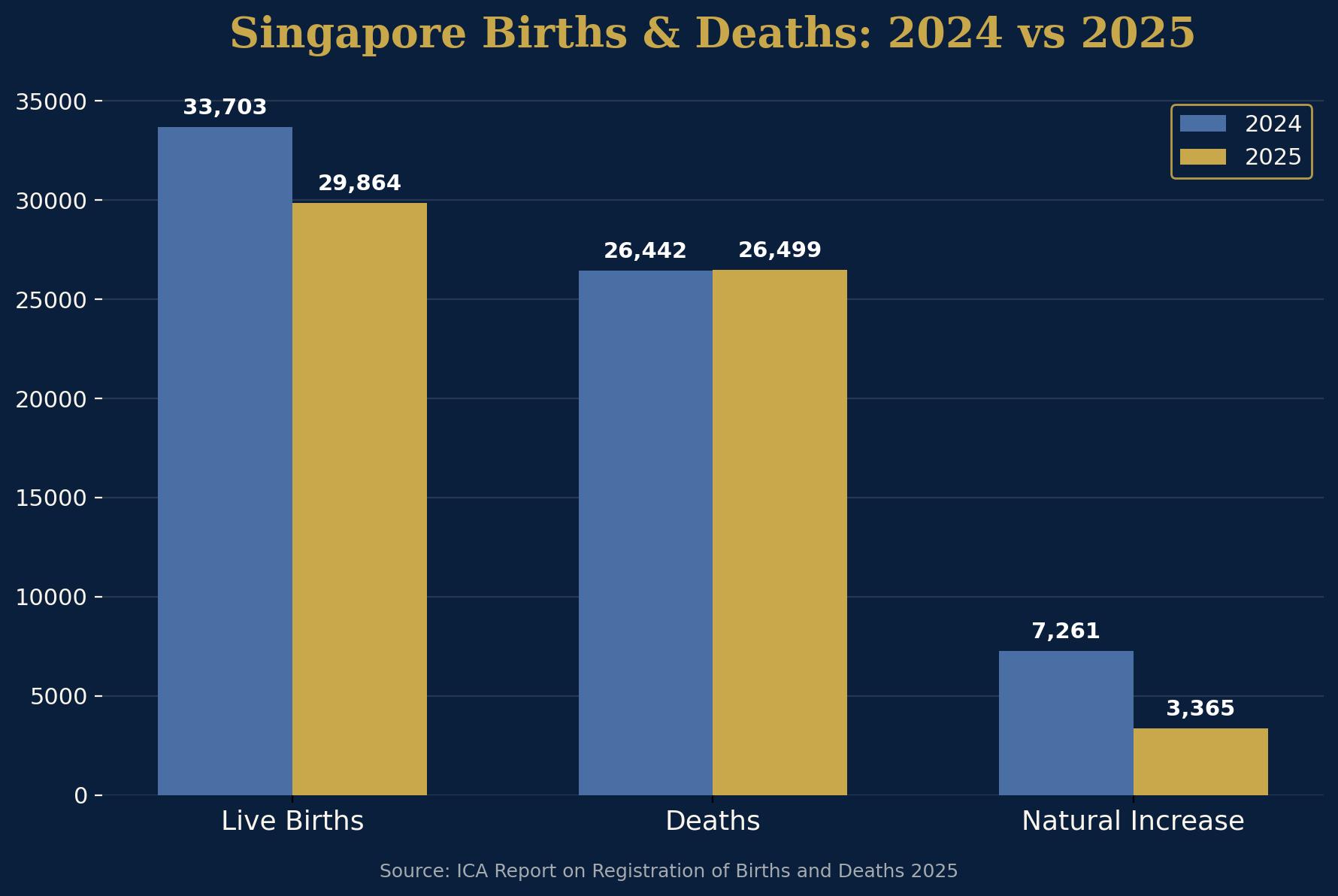
Singapore's total fertility rate declined to 0.87 in 2025, among the lowest globally. In response, the Government has reaffirmed its plans to admit approximately 25,000 to 30,000 new citizens annually over the next five years, announced in February 2026. This approach reflects Singapore's broader strategy to support population stability while balancing economic and social considerations.

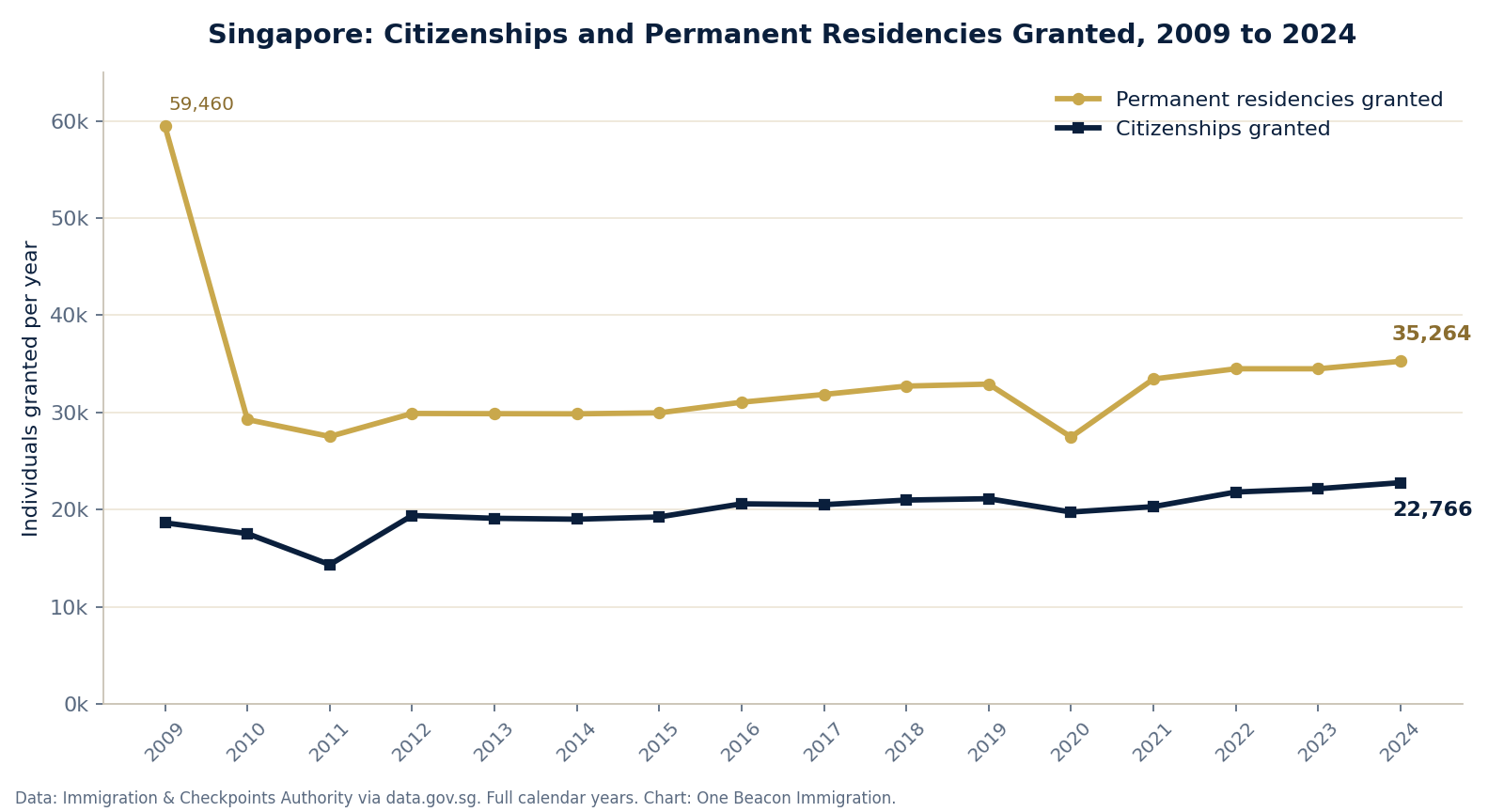
Line chart of Singapore citizenships and permanent residencies granted each year from 2009 to 2024, based on ICA published data

The published numbers at a glance

YearPermanent residencies grantedCitizenships granted
201529,95519,236
201631,05020,589
201731,84920,503
201832,71020,974
201932,91521,115
202027,47019,741
202133,43520,297
202234,49321,802
202334,49122,140
202435,26422,766

Five-year averages, 2020 to 2024: approximately 33,000 permanent residencies and 21,300 citizenships granted per year, slightly higher than the preceding five-year period.

Why it matters

These developments provide context into how Singapore approaches long-term residency and citizenship. Citizenship intake levels are part of broader population planning efforts, and may reflect the need to maintain a sustainable population base, ongoing economic and workforce considerations, and long-term national planning priorities.

Key takeaways

Singapore continues to maintain a structured approach to citizenship intake. Population trends play a role in long-term immigration planning, citizenship numbers are managed within broader national considerations, and PR and Citizenship pathways remain part of Singapore's overall population strategy.

Beacon's view

This update highlights the importance of understanding Singapore's immigration framework within a broader national context. While citizenship intake figures provide general insight into population planning, individual applications continue to be assessed based on multiple factors. Public information indicates that applications are reviewed holistically, taking into account each applicant's profile and circumstances.

For individuals exploring Singapore PR or Citizenship, it is useful to consider how broader policy directions may relate to long-term planning, while recognising that outcomes may vary.

Disclaimer: The statistics and figures referenced above are not produced by One Beacon Immigration. They are drawn from official published sources, including the National Population and Talent Division and the Immigration & Checkpoints Authority, and are reproduced here for general informational purposes only. One Beacon Immigration does not represent or speak on behalf of any Singapore Government agency. For official updates, refer directly to the original sources.
Population in Brief 2025

Singapore Population Reaches 6.11 Million: Key Implications for PR and Citizenship Applicants

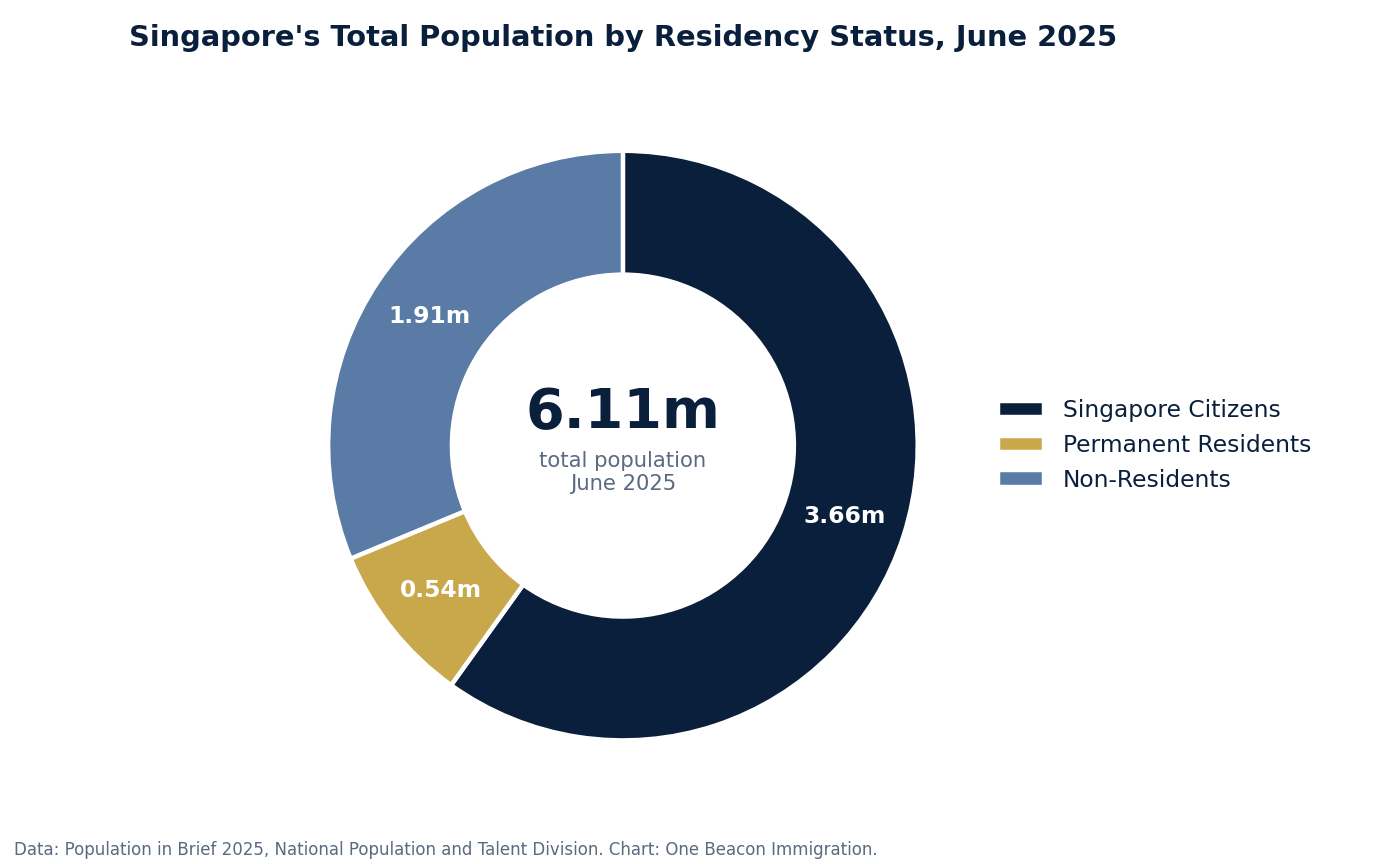
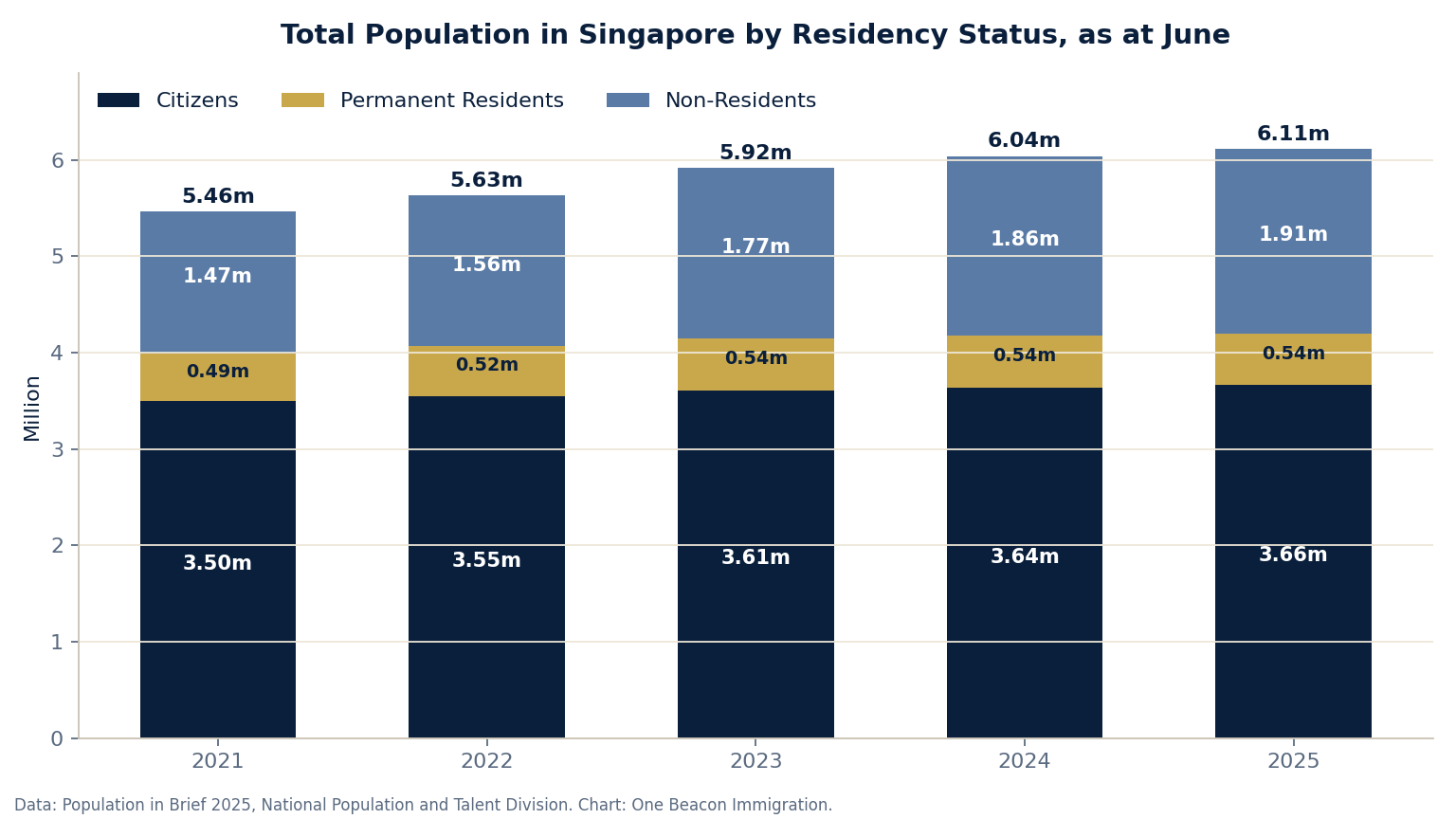
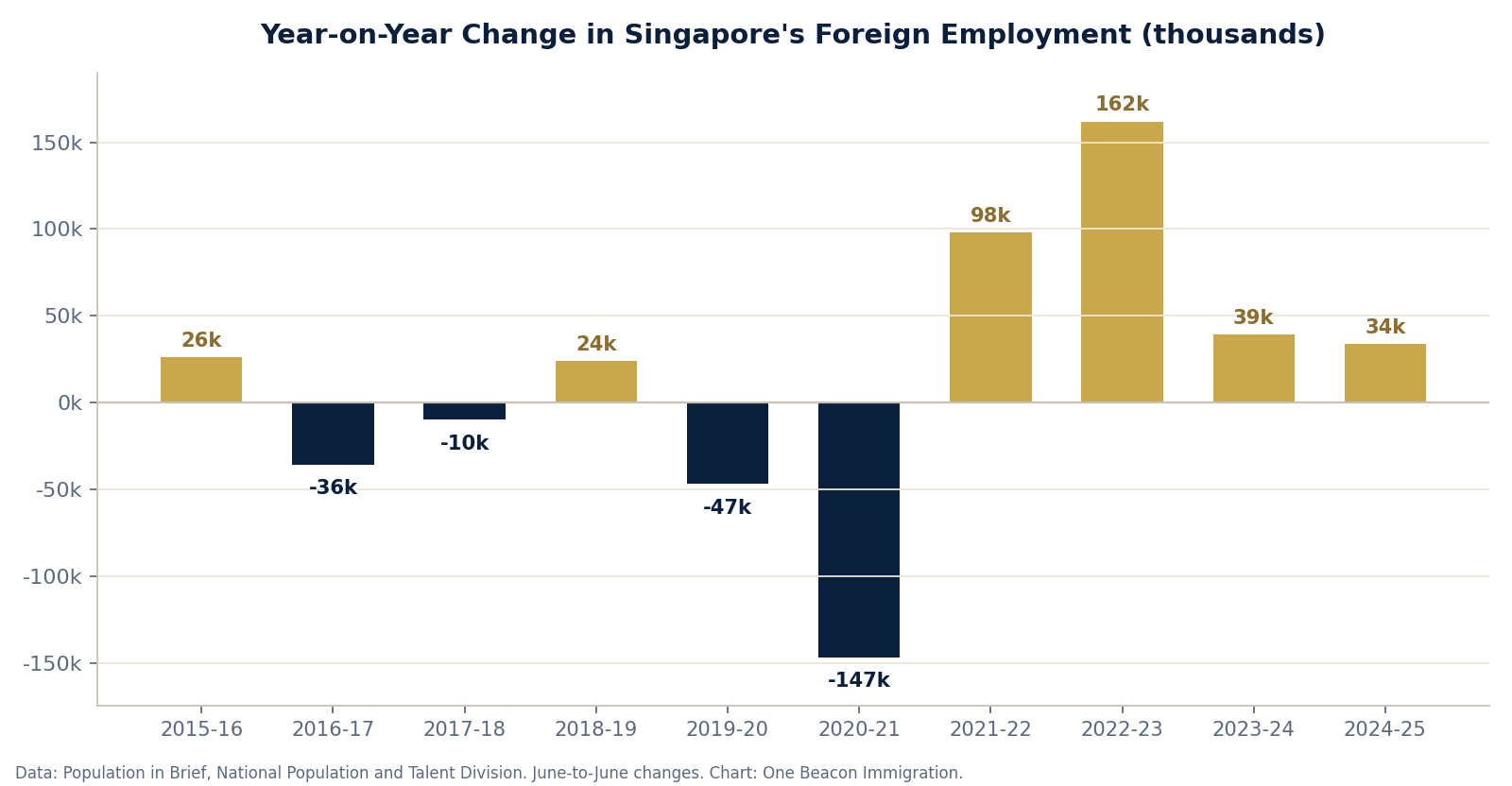
Singapore's total population reached 6.11 million as of June 2025, reflecting a 1.2 percent increase from the previous year, based on the Population in Brief 2025 report released in September 2025. The growth was primarily driven by a 2.7 percent rise in the non-resident population, which now stands at 1.91 million, largely comprising Work Permit holders and migrant domestic workers.

Donut chart of Singapore's total population of 6.11 million by residency status as at June 2025: 3.66 million citizens, 0.54 million permanent residents, 1.91 million non-residents

While citizen births saw a slight increase in 2024, overall fertility remains low, with the total fertility rate at 0.97. At the same time, Singapore continues to face an ageing population, with 1 in 5 citizens aged 65 and above, projected to rise to 1 in 4 by 2030.

In 2024, a total of 22,766 new citizenships and 35,264 new Permanent Residence statuses were granted, reflecting a continued measured approach to immigration.

Stacked bar chart of Singapore's total population by residency status from June 2021 to June 2025, showing citizens, permanent residents and non-residents

Why it matters

Singapore's demographic trends highlight several key considerations: low fertility rates continue to affect long-term population growth, the ageing population is increasing the dependency ratio, immigration plays a role in supporting workforce sustainability, and policies remain calibrated to balance growth and integration.

Bar chart of year-on-year changes in Singapore's foreign employment from 2015 to 2025, showing the pandemic decline and subsequent recovery

Key takeaways

Population growth is increasingly supported by non-residents. Immigration remains part of Singapore's long-term planning, PR and citizenship approvals continue at a controlled pace, and demographic trends influence immigration policies over time.

Beacon's view

This development reflects Singapore's structured and long-term approach to population planning. Immigration policies are shaped by broader demographic considerations, including workforce needs and social integration, and applications for PR and citizenship are generally assessed within that broader national context.

For individuals exploring PR or citizenship, this highlights the importance of presenting a well-prepared profile that reflects stability, contribution, and long-term commitment to Singapore.

A note on "approval rates": ICA publishes the number of permanent residencies granted each year, but not the number of applications received. No official approval rate therefore exists, and any percentage quoted online is an estimate at best.
Disclaimer: The statistics and figures referenced above are not produced by One Beacon Immigration. All data is sourced from the Population in Brief 2025 report (National Population and Talent Division, Prime Minister's Office) and related official publications, and is reproduced here for general informational purposes only. One Beacon Immigration does not represent or speak on behalf of any Singapore Government agency. For official updates, refer directly to the original sources.
Protect Yourself

How to Spot an Immigration Scam in Singapore

Applying for Singapore PR, Citizenship or a work pass is a significant step, and unfortunately it attracts people who prey on hope and uncertainty. Dishonest operators target applicants who are unfamiliar with the process or anxious for a result. Knowing the warning signs is the best protection, and none of them requires any inside knowledge, only common sense and a little caution.

Common warning signs

Based on advisories published by consumer-protection and immigration authorities, the patterns below are consistently associated with immigration scams worldwide. If you encounter any of them, pause and verify before parting with money or documents.

How to protect yourself

Beacon's view

An honest consultancy will never promise an outcome, never claim influence over a decision, and never ask you to be anything other than truthful. What a consultancy can genuinely offer is careful preparation and clear guidance, and the confidence that your application has been put together thoroughly and consistently. If anything you are told feels off, trust that instinct. You are always free to verify directly with ICA or MOM, and to seek a second opinion.

If you would like an honest, no-obligation view of your situation, you are welcome to speak with us about our Singapore PR, Citizenship or work pass services.

Disclaimer: This article provides general consumer-awareness information drawn from publicly available advisories, including those published by immigration and consumer-protection authorities. It is not legal advice. If you believe you have encountered a scam in Singapore, you may refer to the ScamShield resources and the Singapore Police Force. For authoritative immigration information, always refer directly to ICA (ica.gov.sg) and MOM (mom.gov.sg).
Related Services

Explore Our Services.

Talk To Us

Questions about your own situation?

Request a free consultation. Share your details with us and we will contact you within one working day to walk you through your options, with no obligations and no commitments.

Book a Free Consultation → WhatsApp Us Now
💬

Lydia

Immigration Consultant

Online

Hi there! I'm Lydia from One Beacon Immigration. How can I help you today?